Design your Future Self
This project sits at the intersection of futures thinking, strategic foresight, and building, using signal scanning and design frameworks to re-imagine new approach to career planning.
What if we could design our future selves the way we design experiences? In reality, it's not so different. Every good experience starts with a vision of an ideal state, then works backward to the touchpoints and milestones to get there. My theory is that the same logic could hold for a career.
That theory sent me looking for signals, reading through research from HBR, MIT, and McKinsey to build a point of view. Three questions kept surfacing:
What does leadership look like in the age of AI? And how is mentorship changing as AI enters the picture? Where is career development headed?
Scanning the Signals
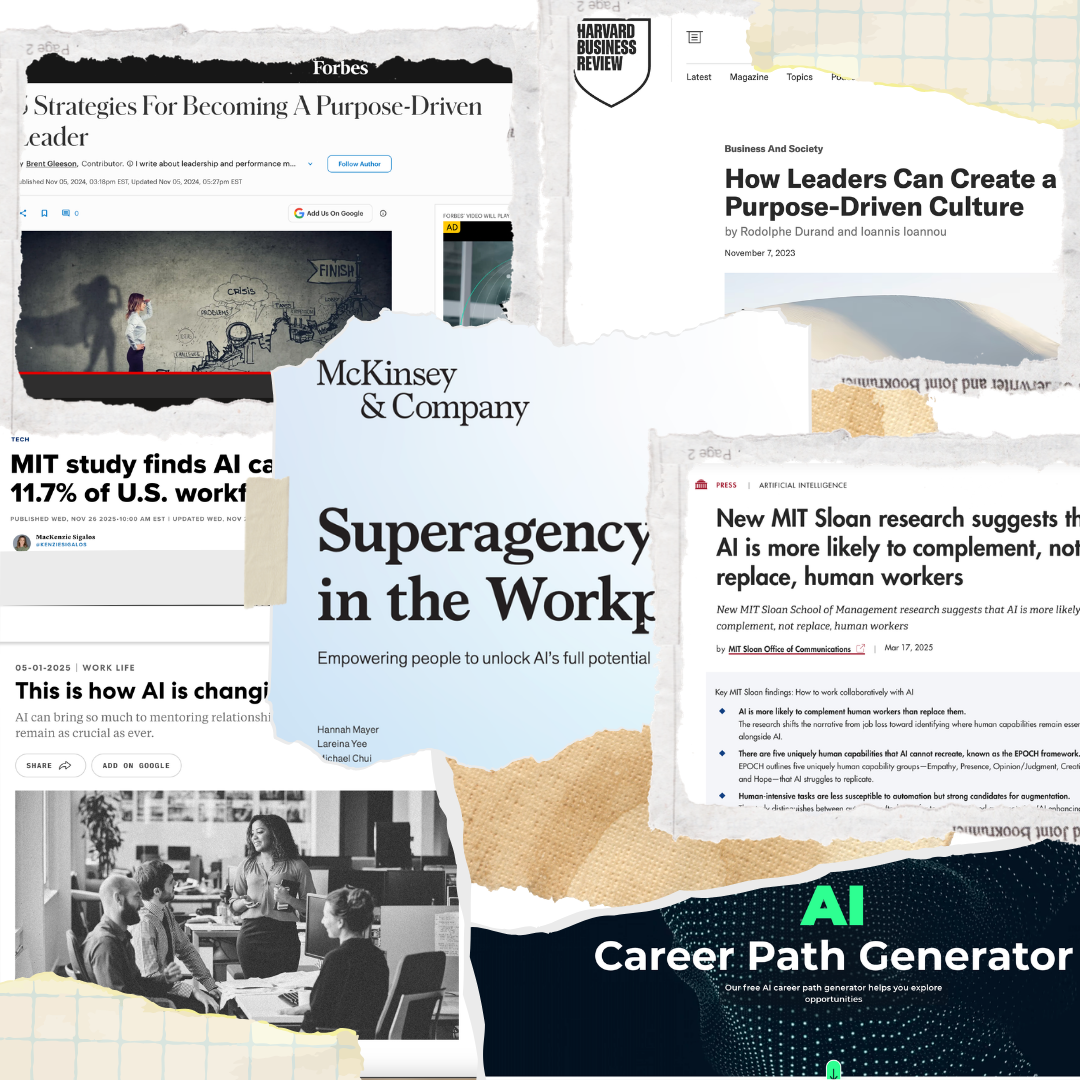
Signals on the future of leadership, mentorship, and career development
I started in the broader AI and tech landscape, because career development doesn't evolve in a vacuum, it follows the shape of work itself. MIT Sloan research points toward AI complementing human workers rather than replacing them outright. McKinsey's "Superagency in the Workplace" research adds another layer: the gap between what AI can do and actually is, depends on how much workers are empowered to actually use it.
From there I turned to leadership. HBR's work on purpose-driven culture, Forbes' strategies for purpose-driven leaders, and HBR's piece on ‘Leading with purpose without burning out’ all pointed to the same thread: as AI takes on more of the technical and analytical load, leadership is drifting toward meaning-making, making the human work of purpose, culture, and relationship-building essential.
Finally, I looked at where AI is already showing up inside career development itself. Dartmouth's career center is actively teaching students to use generative AI in their planning. Tools like AcademyOcean's AI career path generator are automating what used to be a purely human advising conversation. Reddit threads are full of people quietly experimenting with AI as a career coach. And lastly, two pieces , one from Fast Company, one from Forbes, both argue that AI isn't replacing mentorship so much as changing its shape, making it more available and, potentially, more meaningful.
Two frameworks, one question
With those signals in hand, I needed a way to think through the future of career planning. I landed onthese two frameworks, layered together…
Backcasting
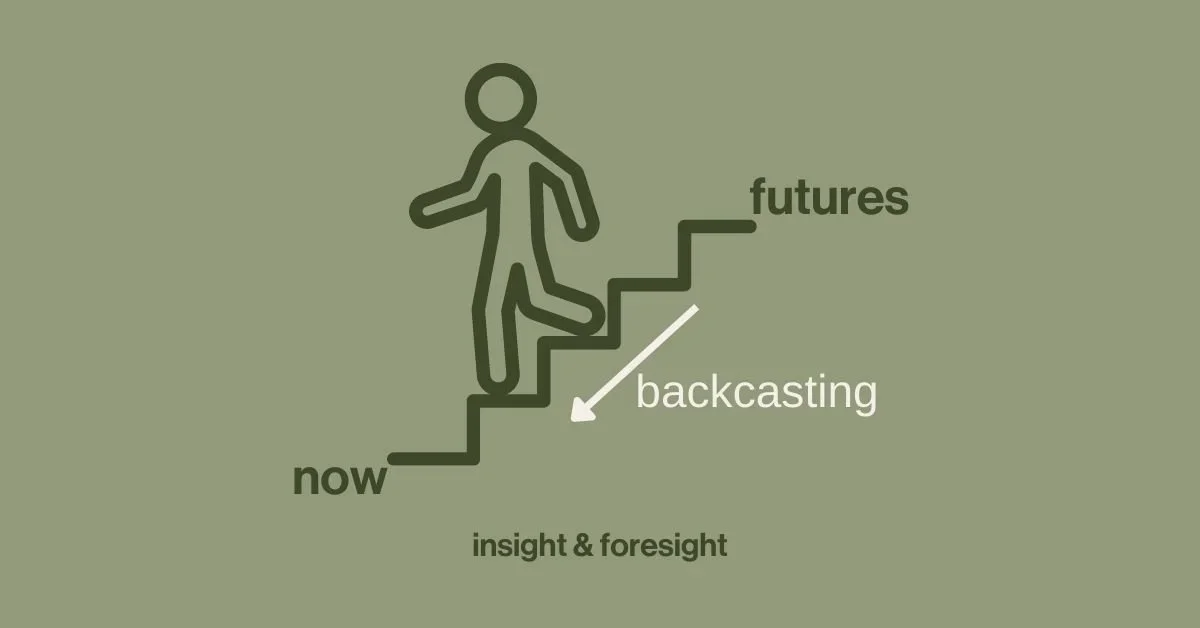
Backcasting is a strategic planning method that begins by imagining a desirable future and working backwards from there, flipping the usual order of operations. Instead of starting from where you are today and projecting forward, you start by imagining the future you actually want, then work backward to identify the steps that get you there. It's a subtle but important shift: forecasting asks "where are we headed?" while backcasting asks "where do we want to end up, and what has to be true along the way?"
Boyatzis’ Intentional Change Theory (ICT)
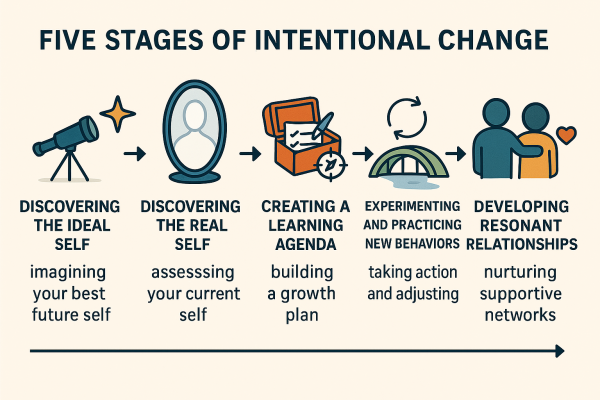
Boyatzis's Intentional Change Theory (ICT) is an evidence-based model of how people achieve lasting personal transformation. Rather than treating change as weaknesses to fix, ICT holds that sustainable change is powered by a personal vision, moving through five cyclical, iterative discoveries, similar to the design process.
Design your Future Self
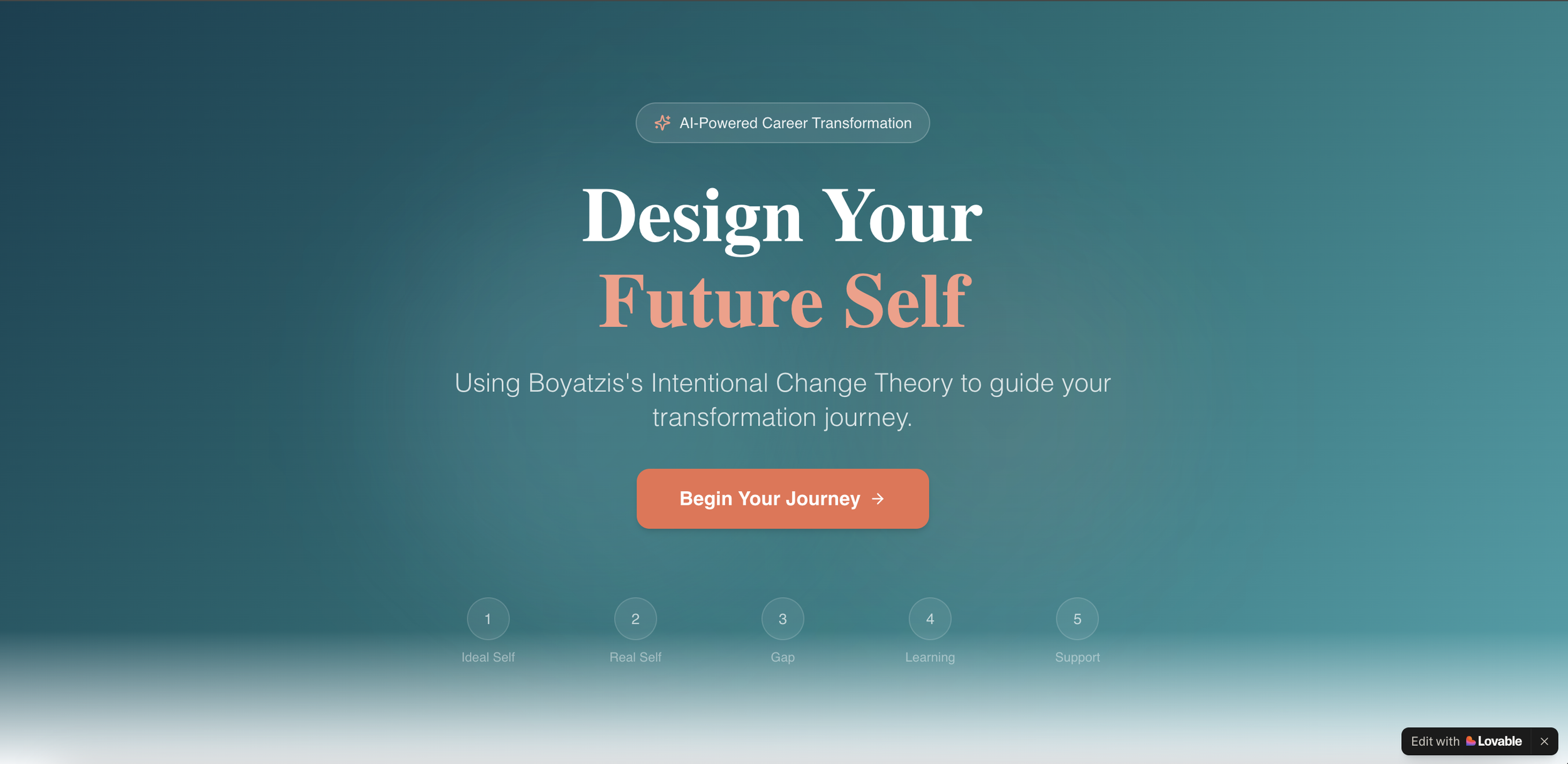
Made with Lovable. Explore my platform here.
The amalgamation of these two frameworks led me to ‘Design Your Future Self’. My platform enables people to envision a desired future career path, then applies backcasting X ICT to work backward from that vision, surfacing the actions to take and connections to build n the present that move someone toward it.
As AI reshapes what leadership and mentorship look like, the way we plan our careers has to evolve too, from a reactive, forecasting posture to a deliberate, vision-first one.
Design Your Future Self is my attempt to build that shift into a tool people can actually use, not just a framework people read about.